
Journal · Ingredients
Is sugar vegan in India? Bone char, jaggery and coconut sugar
The AORAH Atelier · Published · 8 min

AORAH makes vegan chocolate, and the sugar question comes up more often than any other. Is the sugar itself vegan? The short answer is that it depends on how it was refined, and for the sweeteners most vegans in India use, the answer is usually yes. Here is the longer, more honest version, including where the sources disagree.
The question nobody asks out loud
Picture a host with three vegans on the guest list. She has read every label. The dal is dairy free, the dessert uses coconut cream, the wine is vegan certified. Then, halfway through the preparations, a quiet question arrives: what about the sugar?
Nobody at the table knows. It is a very particular kind of doubt. You have done everything right and a single ingredient you cannot see might still undo it. That ingredient has a name, and it is bone char.
What bone char is, and why sugar meets it
Raw sugar is brown. To turn it white, refiners pass the syrup through filters that remove colour. Some of those filters are made of bone char, a charred material made from animal bones. The sugar does not contain bone. The char is a processing aid that touches the syrup and is then removed. But for a strict vegan, an animal product used in the process is a problem.
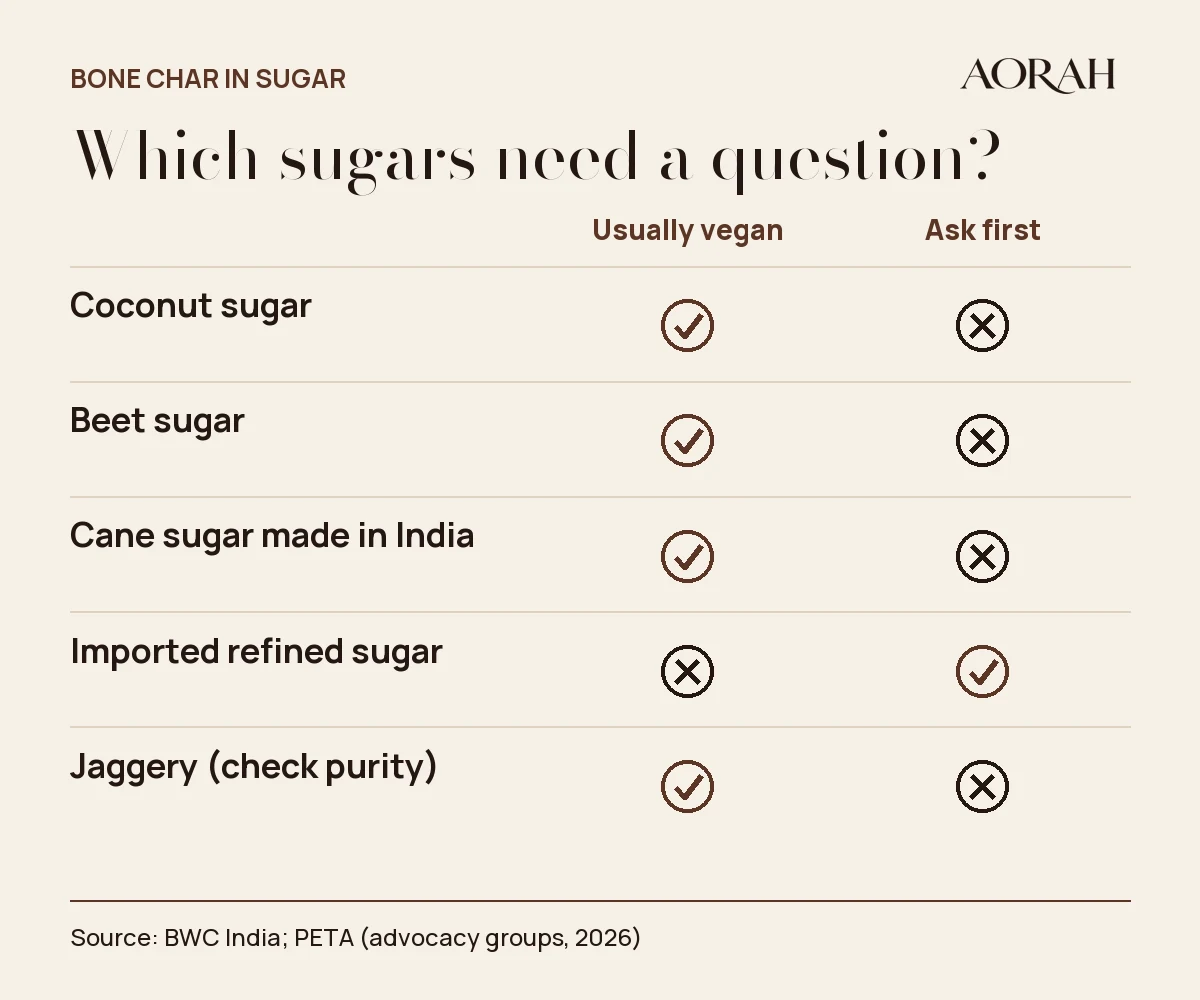
According to Beauty Without Cruelty India, an animal welfare organisation based in Pune, decolourising can use "bone char, traditional granular / activated carbon (coal, wood, coconut), or the use of synthetic ion exchange resins". Only the first of those is animal derived. The others are not.
What the sources say about Indian sugar
On Indian cane sugar, the sources lean reassuring, with caveats. Beauty Without Cruelty India states that "sugar derived from sugarcane in these refineries of India is vegan". It cites a 2017 test of five sugar brands for animal DNA that found none, and adds that refined sugar manufactured abroad "usually involves the bone char filter process". It also notes that Indian cane sugar makers may use sulphur dioxide in a process called sulphitation, which is a mineral treatment and not an animal one.
Two things to hold in mind. First, this is a statement from an advocacy group, not a government regulator, and a single test of five brands is a snapshot, not a guarantee for every bag you will ever buy. Second, packaged foods do not usually say where their sugar came from, so a brand is the right party to ask.
What PETA adds
PETA, in its own guide to the topic, says sugar is typically made from sugarcane, sugar beets or coconuts and that "beet and coconut sugar are never processed with bone char". It adds that brown sugar and confectioner's sugar from companies that use bone char are made with the same refined sugar, so they carry the same problem. Its tip for non organic cane sugar is to look for the word "unrefined" on the label, or to check whether the sugar is made from beets. PETA also lists a few brands in the United States that it says do not use bone char filters, which is of limited use in India, and it makes a US specific point about organic certification that does not apply to Indian products.
Like Beauty Without Cruelty India, PETA is an advocacy group with a position. We cite both because they are the most detailed public sources, and we name them so you can weigh them.
Jaggery, the traditional sweetener
Jaggery is made by boiling cane juice until it solidifies, which on the face of it avoids the filtration step. Beauty Without Cruelty India does not describe jaggery as bone char filtered. It does, however, raise a different concern: that jaggery is sometimes adulterated, and that the whiter kinds can contain added chemicals. The practical advice is to buy from a source you trust, and to prefer the deeper brown, less processed kind.
Coconut sugar: the easy answer
Coconut sugar is made from the sap of the coconut palm, and it is the sweetener that sits most comfortably in a vegan kitchen. Beauty Without Cruelty India calls palm and coconut sugar vegan, and PETA says coconut sugar is never processed with bone char. It is also the sweetener in our 62% Signature Blend.
A note of honesty: "vegan" is not the same as "healthy". Coconut sugar is still sugar, and the amount in a bar matters more than the name on the ingredient list. We cover how to read that number in protein bar versus chocolate bar.
Possible versus practicable
Here is a nuance that makes the whole conversation calmer. The Vegan Society's definition asks you to avoid animal products "as far as is possible and practicable". It does not ask for perfection. That wording is why two thoughtful vegans can draw the line in different places: one avoids every product that touches bone char anywhere in its supply chain, another avoids it where the information is available and does not lose sleep over what cannot be known.
Neither is wrong. What matters is that you know which line you are drawing before you buy a gift, a box of chocolates or a bag of sugar for someone else. If you are shopping for a strict vegan, aim higher than the minimum. If you are shopping for yourself, choose the line you can live with.
A short glossary of the words you will meet
- Bone char: charred animal bone used as a decolourising filter in some sugar refining. Animal derived.
- Activated carbon: a carbon filter made from coal, wood or coconut shell. Not animal derived.
- Ion exchange resin: a synthetic filter that removes colour. Not animal derived.
- Sulphitation: treating cane juice with sulphur dioxide to lighten it. A mineral treatment, not an animal one.
- Unrefined: sugar that has not gone through the colour removing steps. PETA suggests looking for this word on non organic cane sugar.
What to ask a brand
If you would like certainty, a short note usually works. Something like: "Is the sugar in your product vegan, and was bone char used in refining it? Where does it come from?" Brands that know their supply chain answer in a line, and those that do not usually say so honestly. Either answer helps you decide.
A simple way to check
You do not need to become a sugar scientist. Four steps cover most situations:
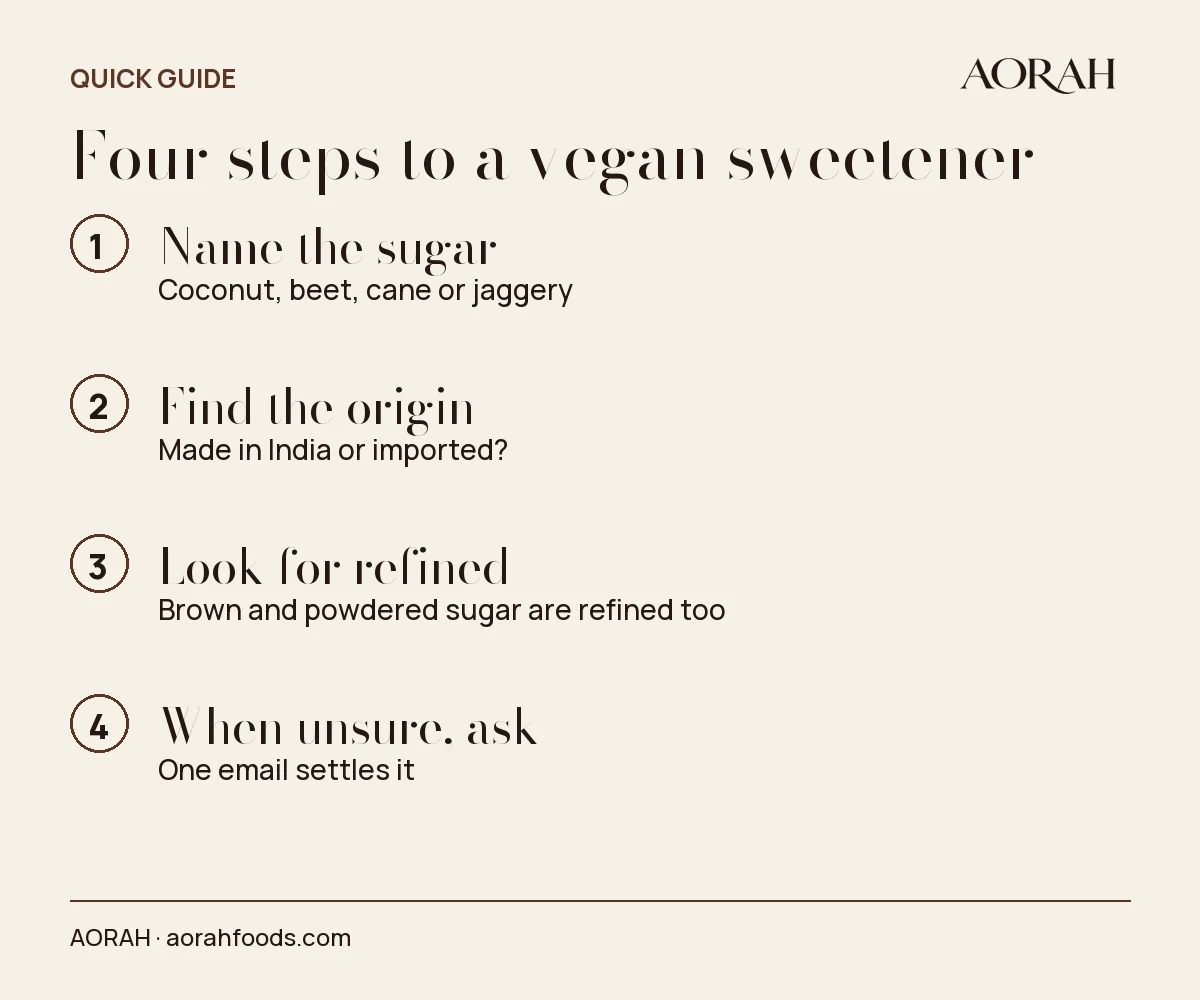
- Name the sugar: coconut, beet, cane or jaggery. The name narrows the question.
- Find the origin: made in India or imported, because that is where the sources draw their line.
- Look for refined: brown and powdered sugar are refined sugar too.
- When unsure, ask the brand. One email usually settles it, and a good brand answers.
What a vegan label can and cannot tell you
In India, food that is formally approved as vegan under the 2022 vegan food regulations must not use any animal derived ingredient or processing aid at any stage. We explain that rule, and the vegan logo, in vegan chocolate in India: why the green dot is not enough. If a brand holds that approval, you have a stronger answer than any guide can give.
Back to the dinner
Back to our imaginary host. The next morning she does the simplest thing: she emails the brand behind the dessert and asks where the sugar comes from. A good brand answers in a line. Her guests, told later, would likely remember not the sugar but that she cared enough to wonder.
That is all a sweetener question really is. A small act of attention, and a good enough reason to read the label.
References and further reading
Written by the AORAH team and checked against the sources above. This is general food information, not medical advice. If you have a health condition or allergy, speak to a qualified professional.
Quick answers
According to Beauty Without Cruelty India, sugar made from sugarcane in Indian refineries is vegan, and it cites a 2017 test of five sugar brands that found no animal DNA. It says imported refined sugar usually involves bone char. Both are claims from an advocacy group, so for strict cases ask the brand.
Bone char is a charred material made from animal bones that some refiners use as a filter to remove colour from sugar syrup. It is a processing aid, so it does not appear on the ingredient list.
Jaggery is made by boiling sugarcane juice and is generally not described as bone char filtered. Beauty Without Cruelty India warns that jaggery is sometimes adulterated, so buy from a source you trust.
Yes. Both Beauty Without Cruelty India and PETA describe coconut sugar as vegan, and PETA says it is never processed with bone char.
Brown sugar is usually refined white sugar with molasses added, so PETA says companies that use bone char for white sugar use it for brown sugar as well. Choose unrefined or coconut sugar, or ask the brand.
Name the sugar, find where it was made, check whether it is refined, and ask the brand if you are unsure. Coconut sugar and beet sugar are the easiest choices.
Featured in this story
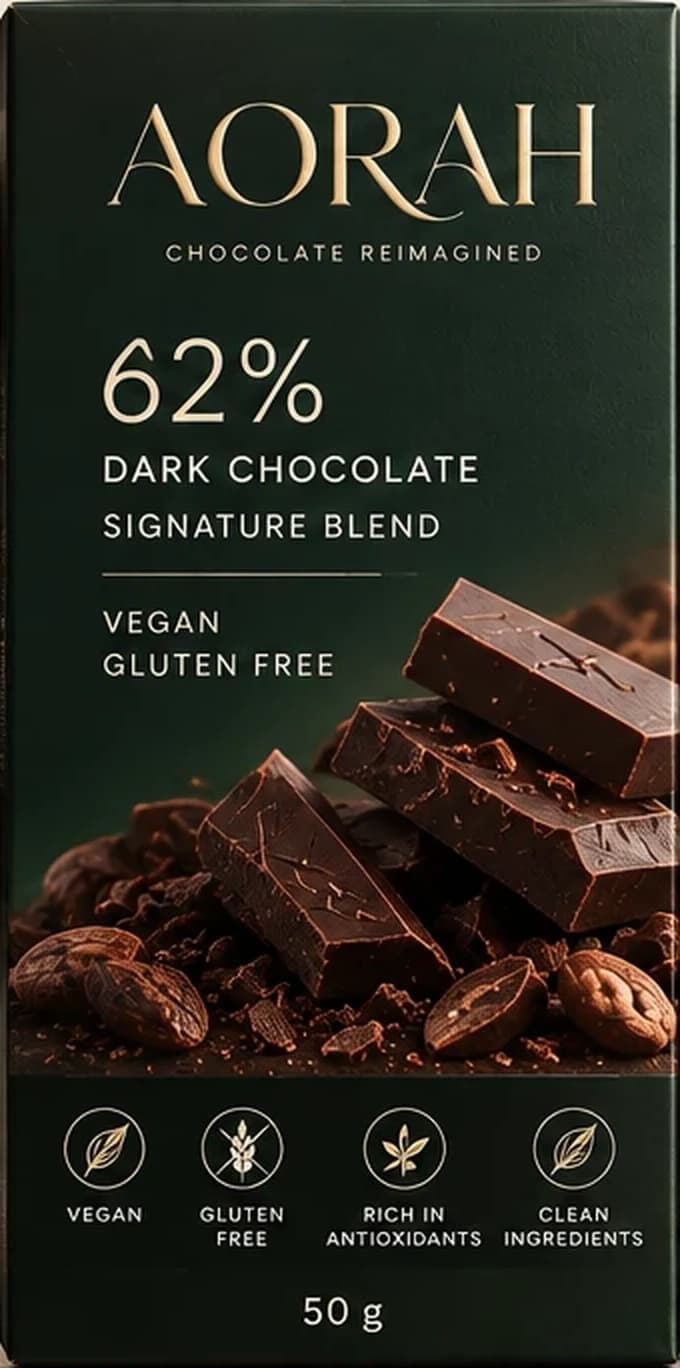
Auckland · 62% Signature Blend
Vegan · Gluten free · 50 g
20% off
A small ritual, delivered
One considered email, when there is something worth saying.
Keep reading