Journal · Chocolate
Vegan chocolate in India: why the green dot is not enough
The AORAH Atelier · Published · 9 min
AORAH makes vegan chocolate, and the first thing we tell anyone shopping for it in India is this: the green dot on a pack does not mean vegan. Under Indian rules, vegetarian food is allowed to contain milk. Vegan food is not. Once you know the difference, you can check any chocolate in under a minute.
The aisle, one week before Diwali
Picture the scene. It is the week before Diwali and you are in a gift shop with four names on your list. One of them is a friend who stopped eating dairy last year. You pick up a handsome box of dark chocolates, turn it over, and find the small green dot that says it is vegetarian. The shopkeeper says it is pure vegetarian, so it must be fine. You almost buy it.
Almost, because something nags. You read the ingredients. Cocoa mass, sugar, cocoa butter, milk solids. There it is, in the fourth line: milk solids. The dot was telling the truth. The box is vegetarian. It is just not vegan, and your friend would have politely eaten one square and quietly never mentioned it again.
This small moment plays out in shops all over India every festive season, and it is not anyone's fault. The two words sound close, and the dot is the most visible symbol on the pack. So let us look at what the dot actually promises.
What the green dot really means
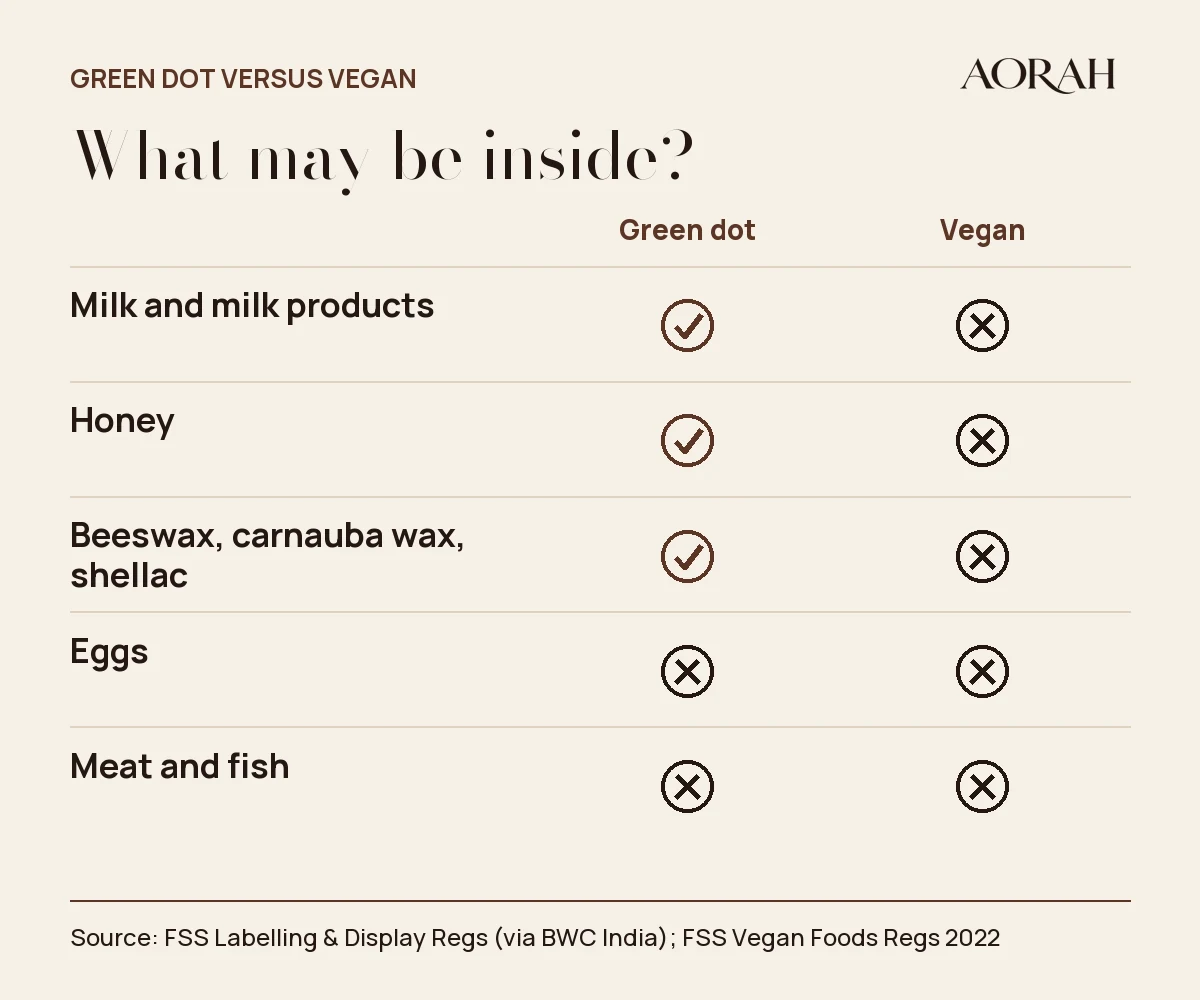
India's packaged food labelling rules sort every food into vegetarian or non-vegetarian, and mark vegetarian foods with a green dot, which the regulation describes as a filled green circle inside a square with a green outline. The key is how the rule defines the two groups. According to the regulation text reproduced by Beauty Without Cruelty India, non-vegetarian food is food containing any part of an animal or products of animal origin, but it expressly does not include "milk, milk products, honey or bees wax or carnauba wax or shellac". Vegetarian food is then defined as "any article of food other than Non-Vegetarian Food".
Read those two definitions together and the problem appears. Milk, honey and shellac are carved out of the non-vegetarian category, so they can sit inside a green dot product. The green dot is a useful promise for someone avoiding meat, fish and eggs. It makes no promise about dairy or honey at all.
The green dot answers one question: is there meat, fish or egg in this? It does not answer: is there milk?
So what does vegan mean?
The Vegan Society, which defined the diet in 1944, describes veganism as a way of living that seeks to exclude, as far as is possible and practicable, all forms of exploitation of and cruelty to animals for food, clothing or any other purpose. In dietary terms, it says, this means "dispensing with all products derived wholly or partly from animals". You can read the full wording on The Vegan Society's site.
Notice the phrase "wholly or partly". It is what separates a vegan chocolate from a dairy free one. A chocolate with no milk powder might still use a wax glaze from an insect, or honey as a sweetener, and either would fail the vegan test while passing a quick scan for dairy.
India wrote its own vegan rule
For years, a shopper had only a brand's word for it. That changed in 2022. According to an FSSAI circular dated 25 July 2022, the Food Safety and Standards (Vegan Foods) Regulations, 2022 were notified in the Gazette on 10 June 2022 and came into force on publication. The same circular explains that the regulator may specify guidelines for approving a vegan logo, with a prescribed application form, an approval or rejection order, and an appeals route if an application is rejected. You can read the original circular on FSSAI's website.
A regulatory summary of the regulations published by Food Safety Works describes the standard in plain terms: a vegan food, including its additives, flavourings, enzymes, carriers and processing aids, must not be animal derived, and no animal origin ingredient or processing aid may be used at any stage of production and processing. That last clause matters. It goes beyond what is in the pack and looks at how the food was made.
The practical lesson is simple. The vegan logo is a stronger signal than a brand's own word, because it means the regulator reviewed an application for it. When you see it, you are looking at an endorsed claim. When you do not, you are looking at a brand's description, which can still be honest but needs a closer read. Rules and procedures can change, so for current details check FSSAI's official pages.
The ingredient list: eight words that give milk away
Whatever the logo says, the ingredient list is the one place the pack has to be truthful about what is inside. In chocolate, milk hides under a handful of names. Scan for these:
- Milk solids, milk powder, skimmed milk powder
- Whey or whey powder
- Casein or caseinate
- Lactose
- Butter oil, milk fat or ghee
- Cream or condensed milk
Beyond dairy, two non dairy ingredients trip people up: honey, which some artisan bars use as a sweetener, and shellac or confectioner's glaze, a resin secreted by lac insects that gives some chocolates their shine. Both fall outside vegan, and both can sit inside a green dot.
The word that fools almost everyone: butter
Then there is cocoa butter. It sounds like dairy and it is not. Cocoa butter is the natural fat pressed from the seeds of the cacao tree, and it is a plant ingredient. As Healthline's review of cocoa butter puts it, cocoa butter "is fully sourced from a plant" and is vegan in its natural form. The same piece notes that most dark chocolates are dairy free, while milk and white chocolates need condensed or powdered milk, which is why they fail.
Dark chocolate gets the benefit of the doubt, but it should not get a free pass. Some dark chocolates do contain milk ingredients, and some are made on equipment shared with milk chocolate. Which is why the last two steps of the test below exist.
And the sugar question
There is one more layer that vegans in India sometimes ask about: how the sugar itself was refined. It is a fair question and a deep one, so we gave it its own article. Start with is sugar vegan in India, which covers bone char, jaggery and coconut sugar and what the sources actually say.
The 60 second label test
Put it all together and you can check any chocolate before you pay for it:
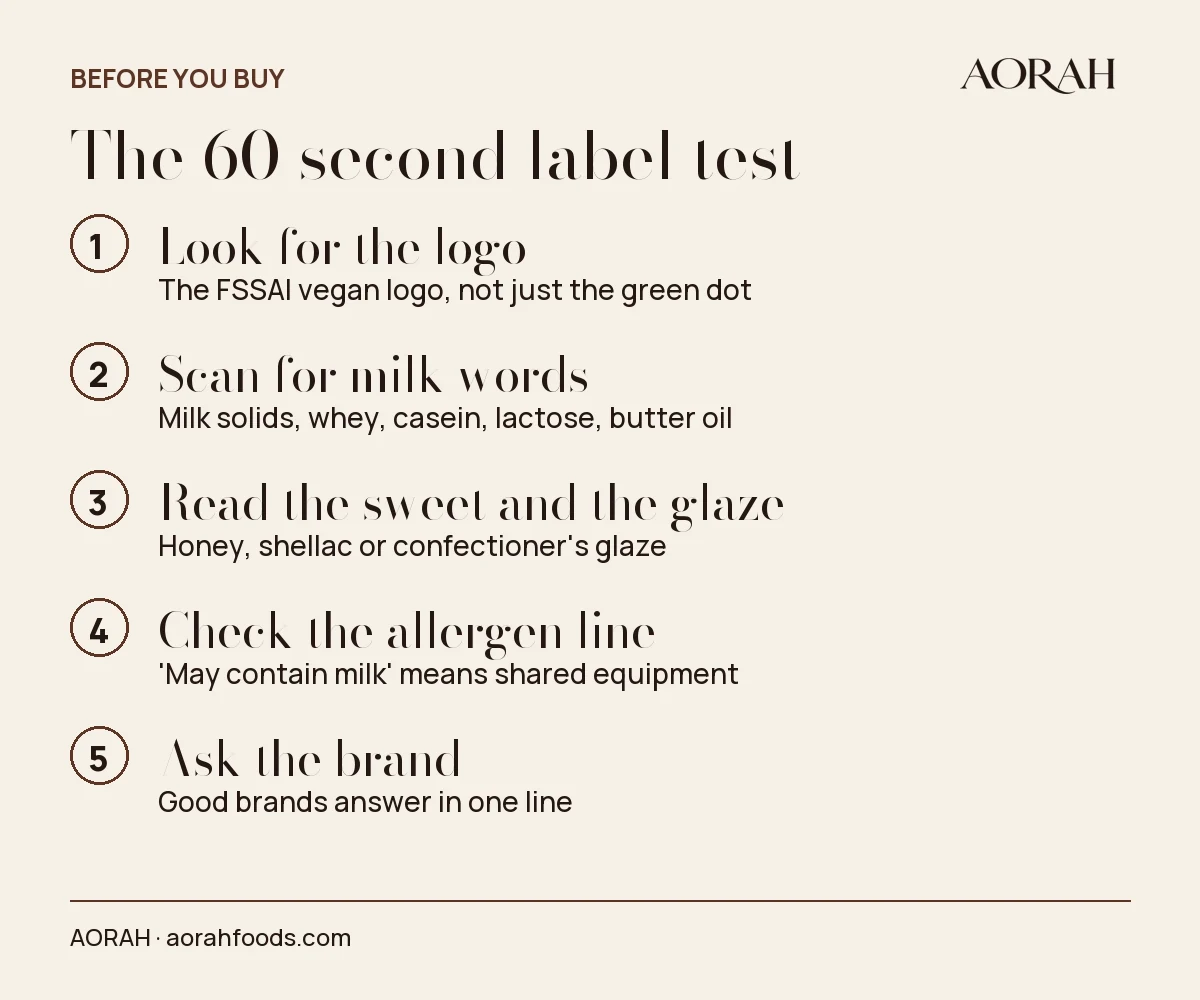
- Look for the logo. The FSSAI vegan logo is the strongest signal. The green dot alone is not.
- Scan for milk words: milk solids, whey, casein, lactose, butter oil.
- Read the sweet and the shine: honey, shellac, confectioner's glaze.
- Check the allergen line. "May contain milk" usually means shared equipment, which matters for strict vegans and for anyone with a milk allergy.
- Ask the brand how it verifies vegan. A brand that is proud of its process answers in one line.
How we handle it at AORAH
We would rather you trusted the label than trusted us, so we print the full ingredient list on every pack and on every product page. The 62% dark bar lists cacao mass, coconut sugar, cocoa butter, natural vanilla extract and sea salt. The 36% protein bar lists cacao butter, pea protein, crunchy millets, quinoa, hazelnut, natural vanilla extract and sea salt. Neither lists milk ingredients, and you can see exactly what is in each before you buy. If you want to give vegan chocolate to someone who is strict about it, our vegan gifting guide and the Diwali hampers are a good place to start.
The dot did its job: it told you there is no meat. For everything else, the ingredient list tells the truth. Read it first, and ask for the logo. That small habit turns a nervous gift into a confident one.
References and further reading
Written by the AORAH team and checked against the sources above. This is general food information, not medical advice. If you have a health condition or allergy, speak to a qualified professional.
Quick answers
Not necessarily. The green dot marks vegetarian food, and Indian rules define vegetarian as anything that is not non-vegetarian. Milk, milk products, honey, beeswax, carnauba wax and shellac are excluded from the non-vegetarian definition, so a green dot chocolate can contain milk. Check the ingredient list and look for the FSSAI vegan logo.
It is the mark that approved vegan foods can carry under the Food Safety and Standards (Vegan Foods) Regulations, 2022, which FSSAI notified on 10 June 2022. A food business applies to FSSAI for endorsement, and the logo can be used only after approval.
Yes. Cocoa butter is the natural fat from cacao seeds and is a plant ingredient, despite the name. Check the rest of the ingredient list, because many chocolates add milk solids, milk fat or whey.
No. Many dark chocolates are dairy free, but some add milk fat or milk powder, and some are made on shared equipment. Read the ingredients and the allergen line every time.
Standard white chocolate is not, because it is made with milk. Vegan versions use plant milks or powders instead, and they should say so clearly on the pack.
Look for the FSSAI vegan logo, scan the ingredients for milk, whey, casein, lactose and butter oil, check for honey and shellac, read the allergen line for shared equipment, and ask the brand how it verifies the claim.
Featured in this story
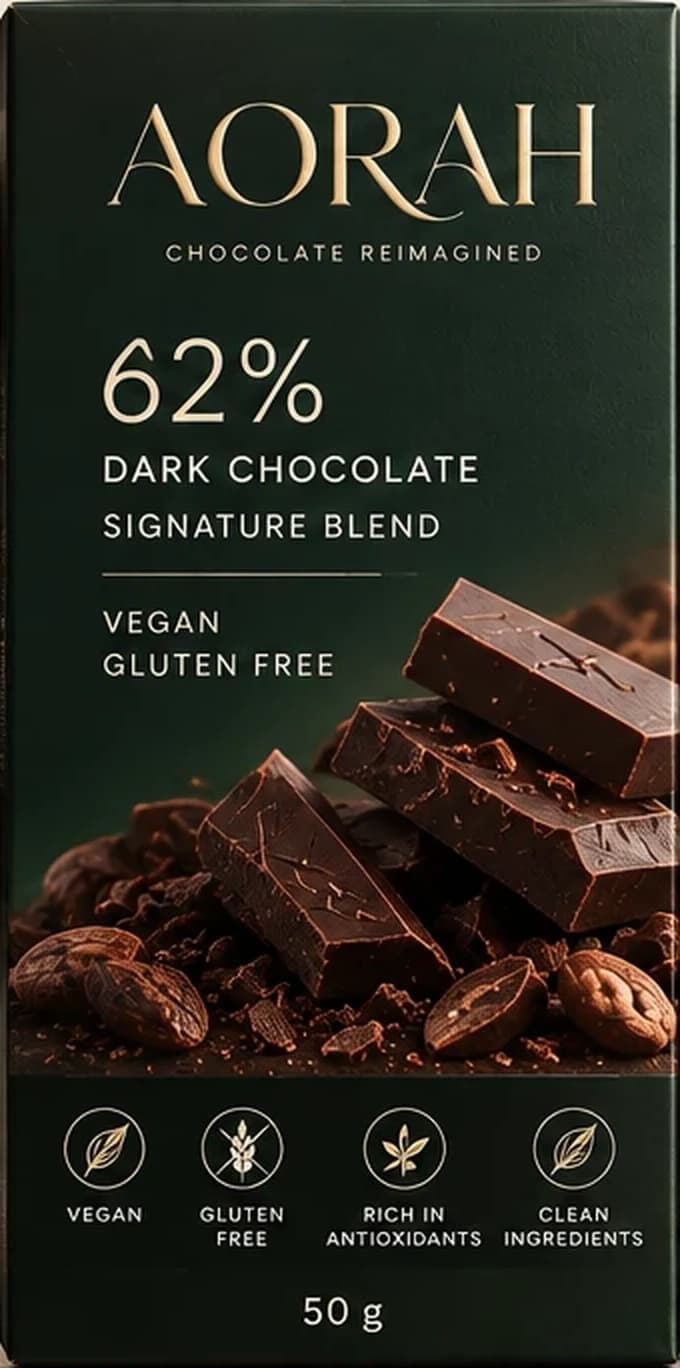
Auckland · 62% Signature Blend
Vegan · Gluten free · 50 g
20% off
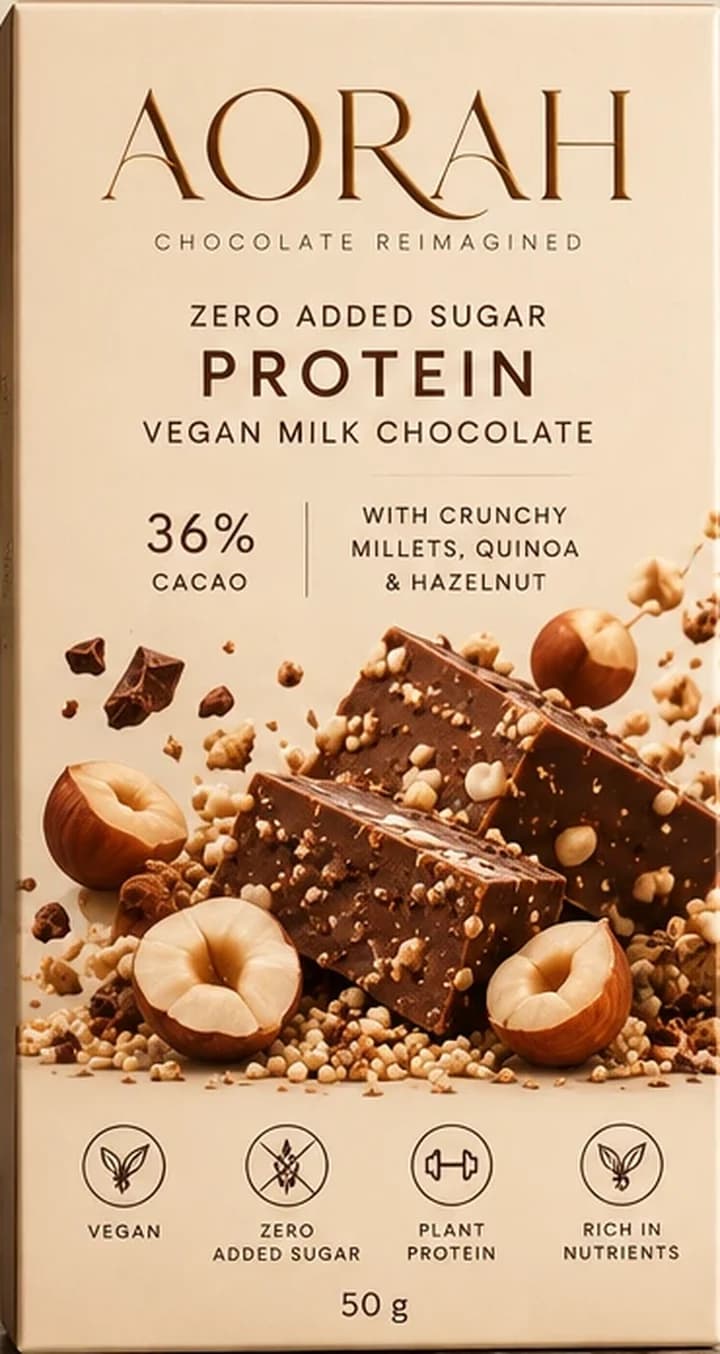
Hamilton · 36% Protein Vegan Milk Chocolate
Vegan · Zero added sugar · Plant protein · 50 g
20% off
A small ritual, delivered
One considered email, when there is something worth saying.
Keep reading